


In the Medical Category of the iF Design Ranking
Designing for healthcare means working where complexity is real.
.avif)
Medical and laboratory products are used in environments where precision matters and mistakes are costly. Devices must be intuitive. Interfaces must be clear. Workflows must support professionals who operate under pressure.
Based on its cumulative iF Design Award performance, FLUID Design - a Munich-based design and innovation consultancy - holds the No. 3 position in Germany in the Medical category of the iF Design Ranking.
For us, this position reflects years of hands-on design work in regulated medical contexts - not a strategic claim, but the result of consistent, practical execution.
What this recognition represents
iF Design, founded in Hanover in 1953, is one of the world's longest-running and most internationally recognized design institutions - tens of thousands of submissions from over 70 countries are evaluated each year by an independent expert jury.
The iF Design Ranking is based on accumulated award performance over time. It reflects sustained performance, which is critical in healthcare. Products must pass usability validation, meet regulatory requirements, and prove themselves in real clinical settings and workflows. Good design becomes visible in daily use through clarity, safety, and ease of use, not through appearance alone.
Our ranking position reflects sustained contributions across multiple medical projects, devices, digital products, and systems.
"Medical design isn't a field we serve - it's the standard we apply. We work strategically - diving deep into the full ecosystem: healthcare professionals, patients, buyers, technical staff. That breadth of insight is what separates design that looks right from design that actually works. Complexity and clinical reality aren't constraints. They're the conditions that reveal the quality of the work."
- Roman Gebhard, Managing Partner, FLUID Design
Designing where digital and physical meet
Much of our medical work sits at the intersection of industrial design and digital interaction.
Laboratory systems, diagnostic devices, and connected medical equipment are no longer isolated objects. They are part of broader ecosystems that combine hardware, software, and data.
Design decisions affect how users navigate complex systems, how clearly information is presented, and how safely procedures can be performed or new users can be onboarded and continuously trained on mission-critical devices or tools.
We approach these challenges iteratively - through research, prototyping, testing, and refinement. Human factors are not an afterthought. They are embedded from the beginning.
Inside our work
We put these principles straight into real development projects - always practical and iterative.
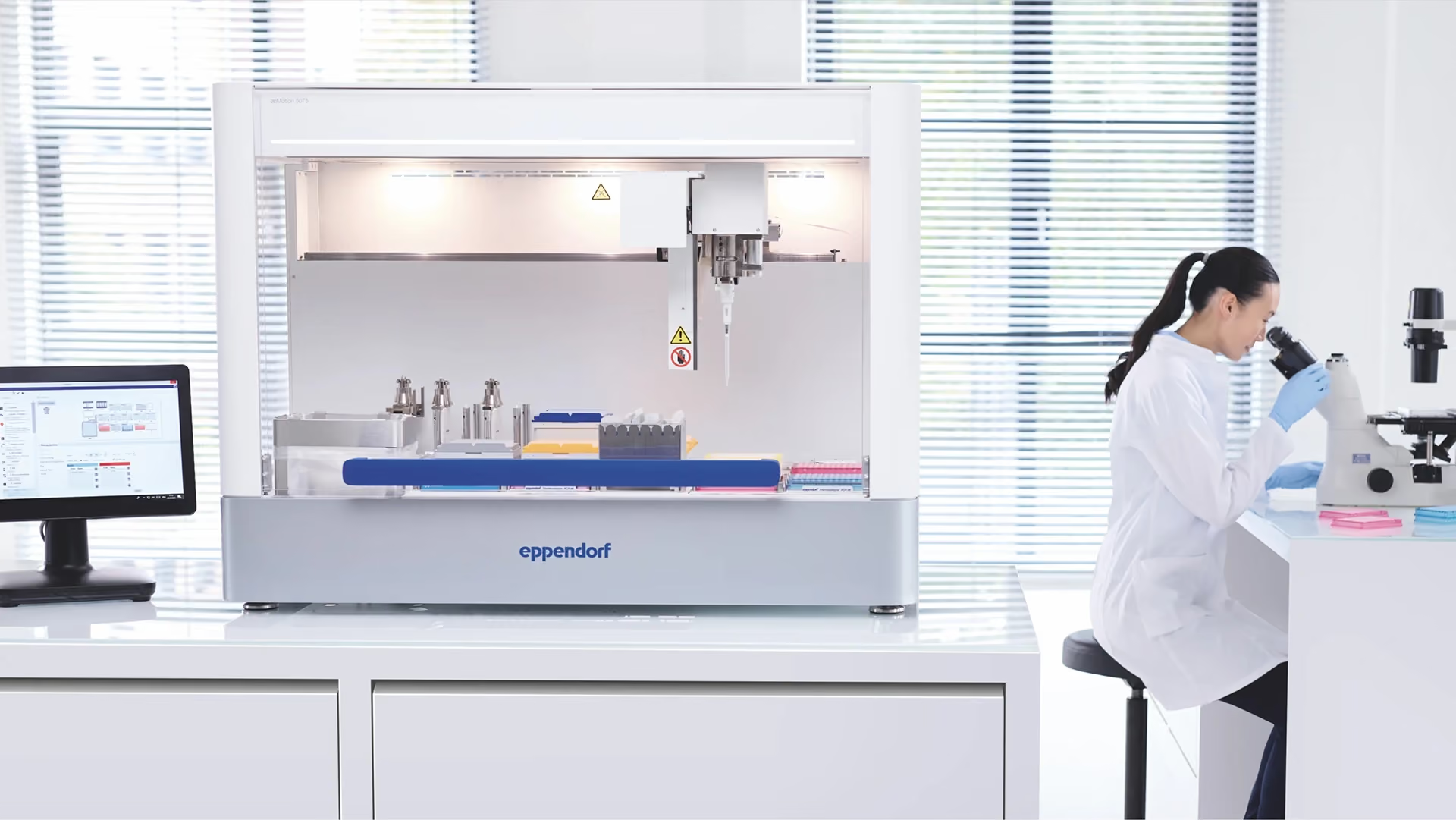
For Eppendorf's epMotion® series (an automated liquid handling platform for laboratory pipetting in biotech and pharma research), the challenge was not simply to redesign a single device - it was to establish and define a new design language for an entire product family. Working within a long-term partnership, we developed a visual and functional expression that translates Eppendorf's quality values into physical form: reduced, minimalist geometry, a distinctive metal belt detail running the perimeter of each unit, and a prominent LED status line that communicates system state at a glance. All of this further establishes Eppendorf as a systematic, full-service provider in the professional laboratory field. The design earned the iF Design Award 2025 and established a foundation that now serves as the basis for the broader portfolio.
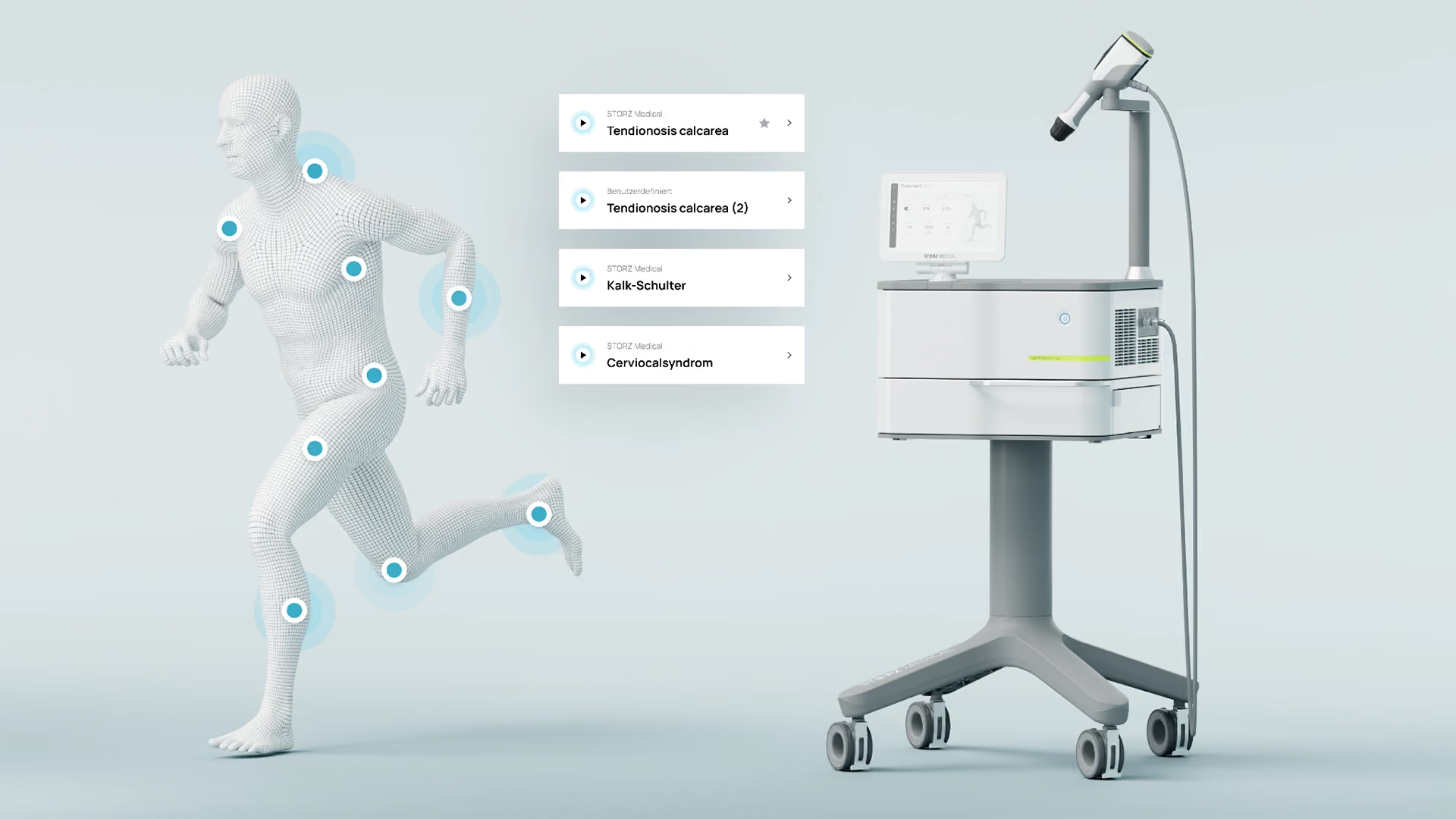
On the MASTERPULS Icon for Storz Medical (a shockwave therapy device line used in orthopedics, physiotherapy, and rehabilitative medicine), we worked across both industrial design and the full UX/UI of the on-screen software and the handpiece interface - developed in parallel from day one, including the UI System. The industrial design redefined the entire product architecture: ergonomics of treatment handpieces, storage and mounting logic, and the 360° treatment experience. The software redesign tackled an equally complex problem: years of incremental additions had created a certain misalignment with actual clinical workflows. We mapped real therapy sequences through practitioners' observations and expert interviews, then rebuilt the interface around the clinical mental model and workflows - from indication selection through to treatment documentation. A medically accurate patient avatar, designed and animated to illustrate anatomical targets and guide patients through planned treatment routine, improved both patient confidence and treatment compliance.
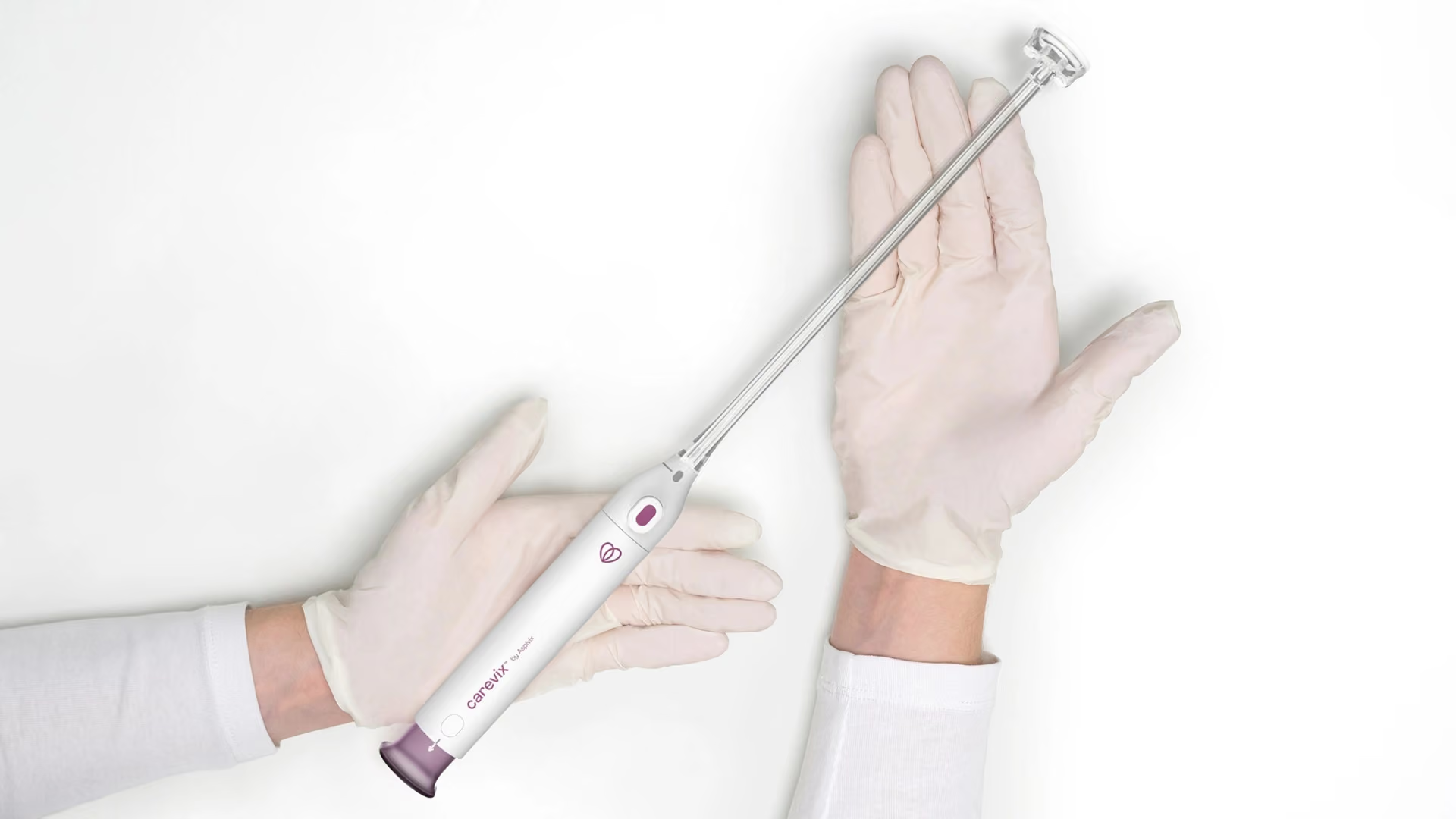
For Aspivix, a Swiss medical startup, we designed the Carevix (a cervical tenaculum device using suction technology for IUD insertion). The standard of care in this area had not meaningfully changed in over a century - approximately 90% of patients report pain during the procedure, which discourages many from choosing this highly effective contraception option. Our approach combined in-depth research with gynecologists, patients, and midwives with iterative functional prototyping focused on single-interaction simplicity. The result eliminates tissue-piercing entirely, significantly reduces pain and bleeding, and communicates clinical confidence through its appearance and ergonomics - for both patient and provider. The Carevix received the iF Design Award 2022.
This reflects the level at which we operate: practical, iterative, and deeply rooted in actual product development.
Focused on regulated medical environments
Over the past years, FLUID has deliberately strengthened its focus on regulated medical and laboratory ecosystems.
Based in Munich, we work with organizations developing complex medical technologies - from established global brands to emerging innovators across Germany and internationally. Our contribution lies in translating technical sophistication into intuitive user experiences that function reliably in practice. We work in alignment with the regulatory frameworks our clients operate within - including MDR and IEC 62366 - integrating human factors and usability engineering into the design process from the outset, not as a compliance afterthought.
The iF Design Ranking reflects this direction. It does not change how we work. It makes sustained design performance visible.
If you are developing medical technologies and are looking for a design partner who combines user-centered thinking with hands-on product development experience in regulated environments, let’s start a conversation.
Contact us

Subscribe to our newsletter!

Copyright © FLUID Design GmbH — All rights reserved.