


Why FLUID Sits Right in the Middle of the Munich Innovation Engine
Bringing a new medical product to market is a long road. For young companies, every month counts, every decision compounds, and the path from a clinical idea to a fundable, validated product is rarely a straight line.
This is the territory FLUID Design has chosen to make its own. Alongside our work with established medtech and pharma brands, we have built a dedicated practice supporting health and medtech startups and scaleups - and work from Munich, in the middle of one of Europe's strongest life-science and deep-tech ecosystems.
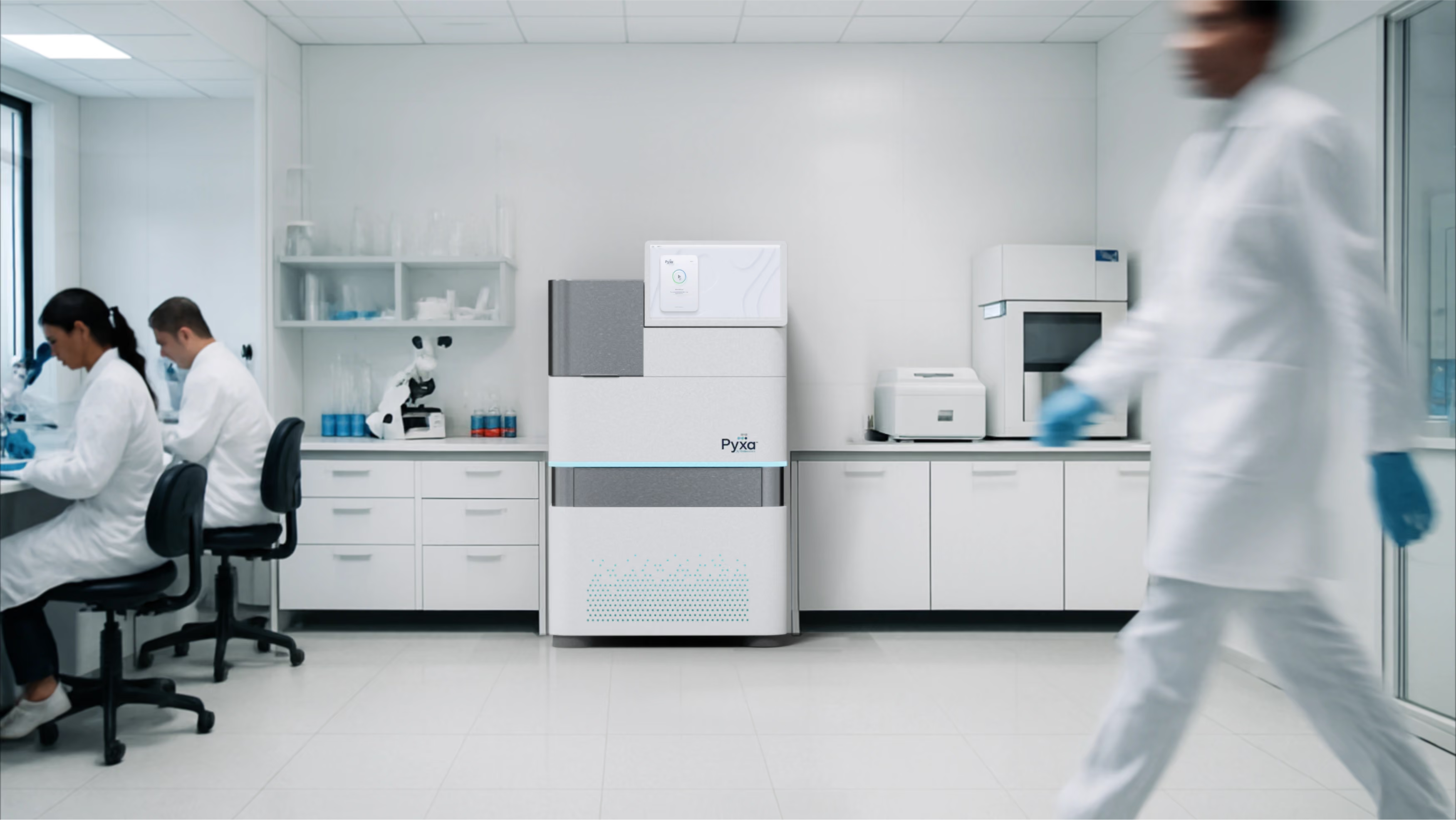
Why startups, and why us
Most health and medtech founders are exceptional in one or two dimensions - clinical insight, scientific depth, engineering rigour. The gap usually opens somewhere else: in user research, in product strategy, in the design and prototyping work that turns a strong idea into something investors, regulators, and clinicians can actually evaluate.
We enjoy working in that gap. Not as an outside vendor, but as an active and advising part of the development process - making sure the right things happen at the right time, so a young company has a smooth and successful path toward a real product, and with it a successful startup or scaleup story.
That requires more than design execution. It requires judgement: when to research and when to build, when to invest in a high-fidelity prototype and when a working mock-up is enough, when to push for a usability study and when to protect the founder's time and runway. Eighteen years of medical and laboratory product work, across global brands and emerging companies, is what gives us that judgement.
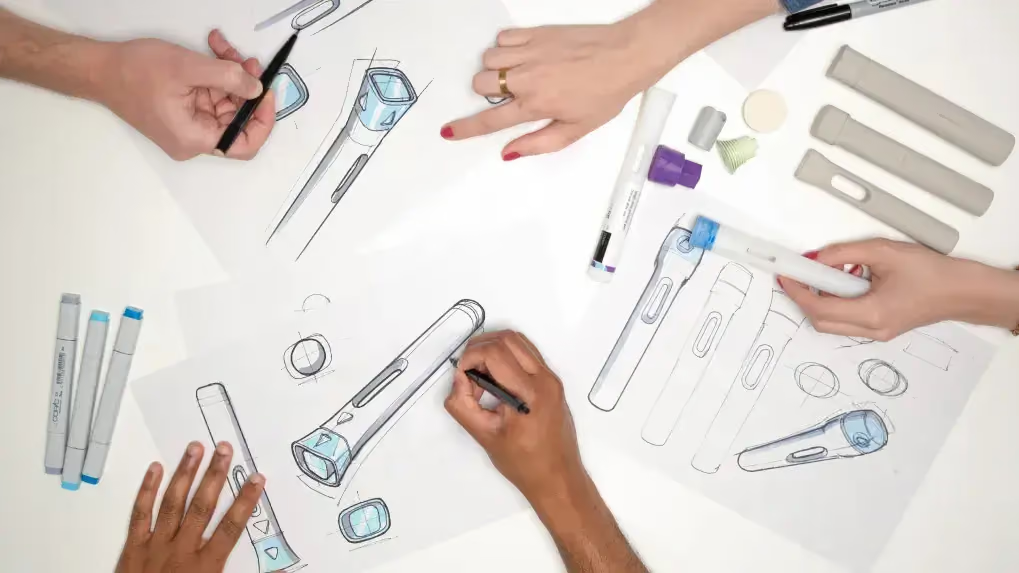
Munich is not an accident
We are based in Munich on purpose. Two world-renowned universities - LMU and TUM - produce a constant stream of clinical, scientific, and engineering talent. UnternehmerTUM, one of Europe's largest entrepreneurship centres, turns that talent into companies. Bits & Pretzels brings the international founder, investor, and operator community to the city every year - I joined the community there last year and continue to engage with it.
For health and medtech founders, this matters in two ways. The ecosystem is close - clinicians, KOLs, manufacturing partners, and capital are within a short tram ride. And the partners founders need around them - usability labs, regulatory consultants, contract manufacturers, clinical sites - are within our existing network.
We know who to call. That alone saves young companies weeks.
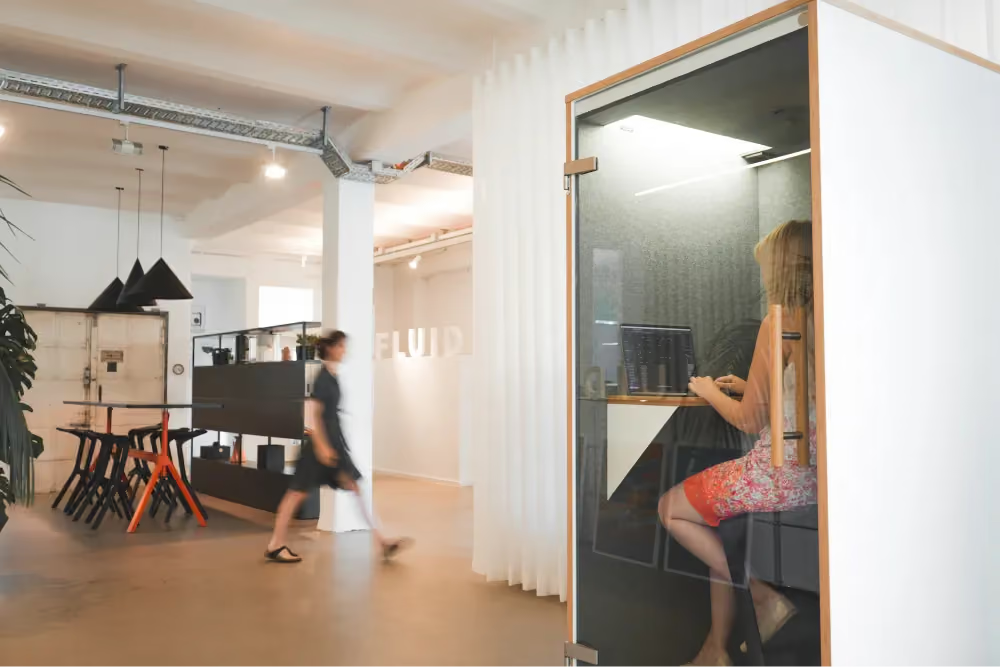
Hardware, software, and the system around them
Health and medtech products today are rarely just one thing. A diagnostic device comes with a companion app. A therapy system relies on cloud data and a clinician dashboard. A consumer-health product hides a regulated medical core. We are set up for all three modes - pure hardware, hardware combined with software, and software-only products - and we treat the system, not the artefact, as the design object.
Our cross-disciplinary teams cover the full arc:
- User research and innovation strategy - to ground the product in real clinical workflows and real user behaviour, not assumption.
- Industrial design - for devices that need to be safe, ergonomic, and manufacturable.
- UX/UI Design - for software that clinicians, patients, and operators can actually use under pressure.
- Complex prototyping - functional proofs of concept that hold up in front of investors, ethics boards, and first users.
- Usability engineering and human factors - design aligned with expectations like IEC 62366 and FDA human factors guidance, so the work supports your validation and approval path rather than complicating it.
Working cross-discipline in one team - instead of handing files between siloed agencies - is what lets us move at startup speed without losing depth. For early-stage companies, that speed is often the difference between hitting and missing a financing round.
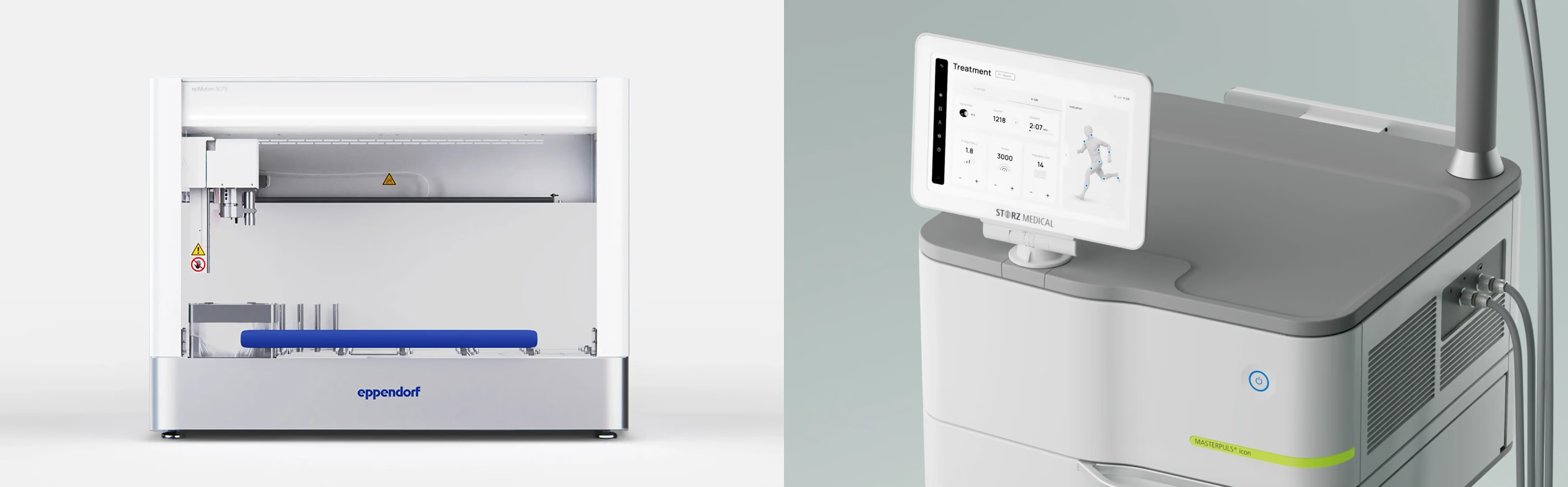
International experience, applied locally
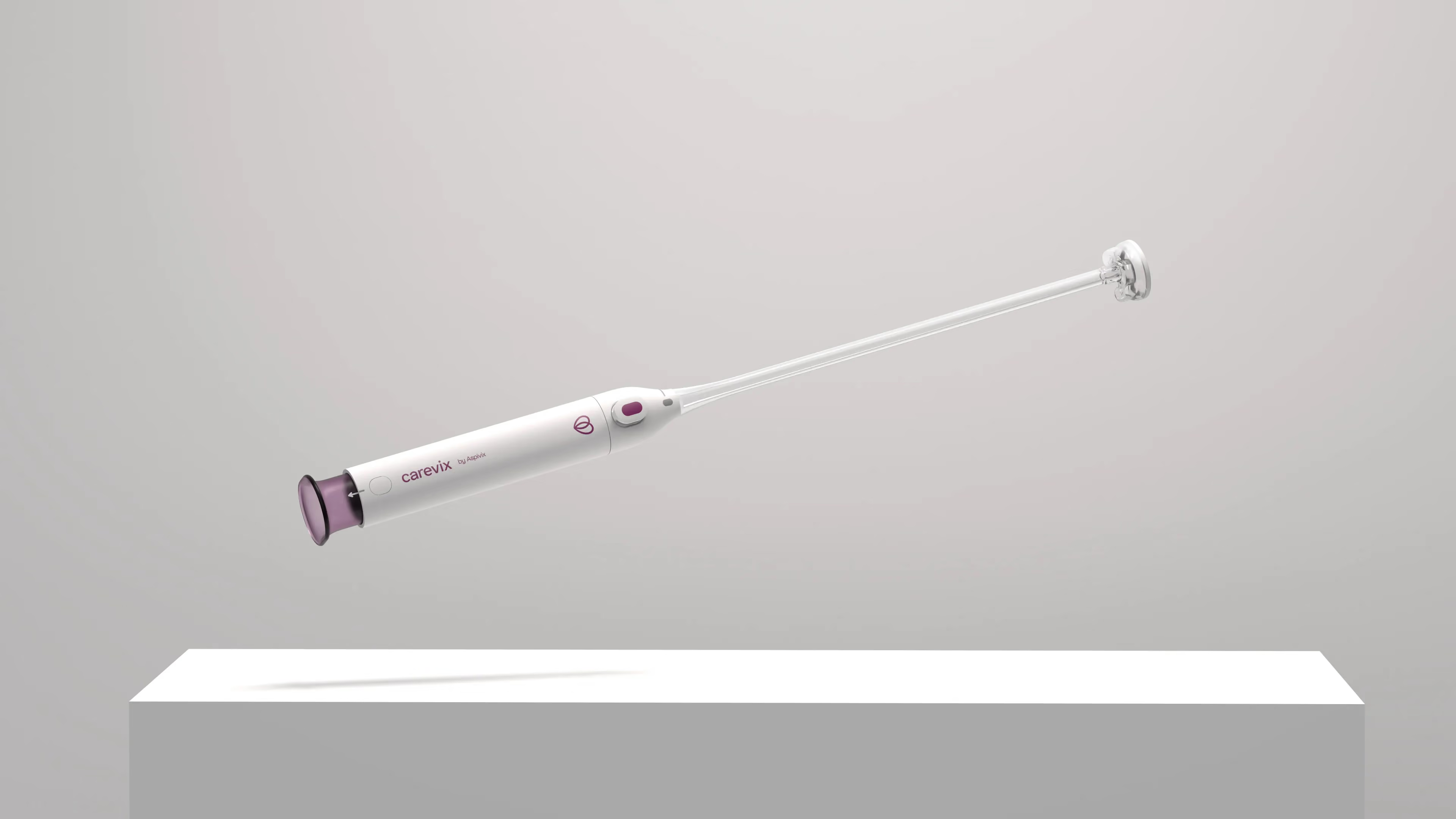
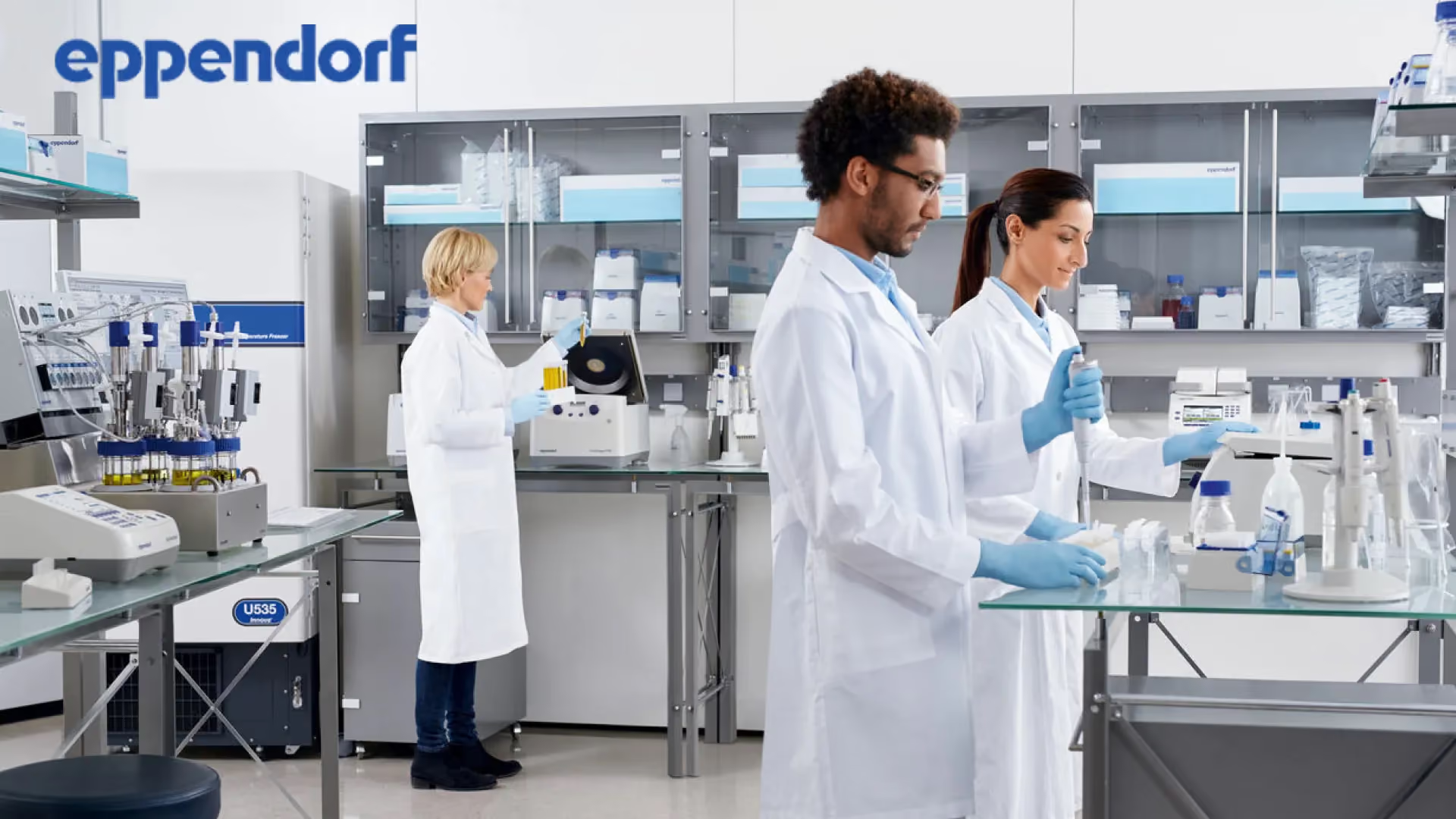
Inside the same studio that supports startups, we work day-to-day with international companies that founders aspire to compete with - Eppendorf, Roche, Sanofi, BD Rowa, Radiometer, Storz Medical, Novartis. And we have done the same hands-on work alongside ambitious newcomers including Aspivix, Stellaromics, and Osler Diagnostics.
That mix is intentional. The startups benefit from standards and patterns proven inside regulated, global organisations. The established players benefit from the speed and pragmatism we sharpen in the startup work. Both sides shape how we approach the next project.
What it looks like to work with us
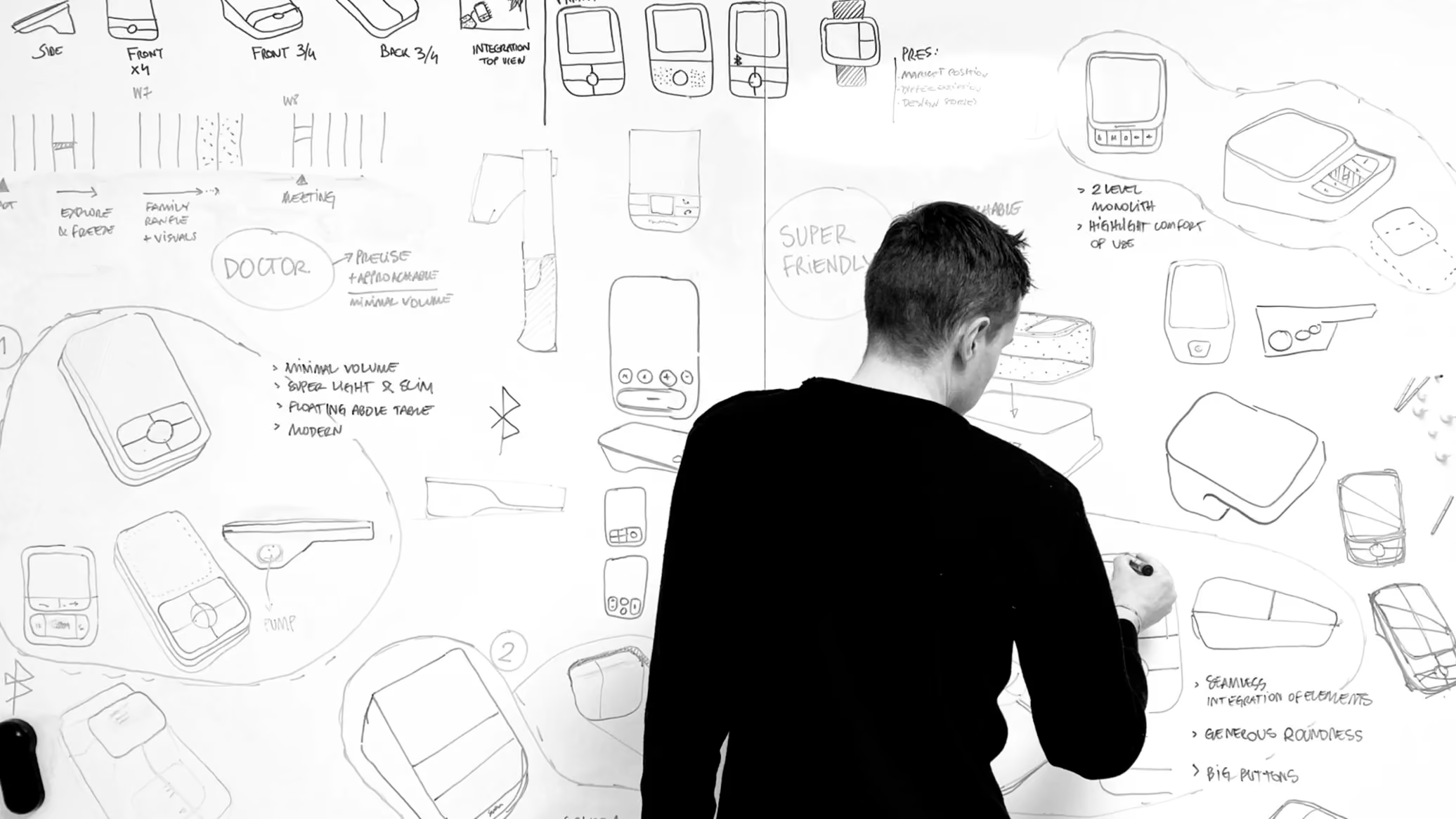
A typical first conversation is short and concrete. We want to understand where the company is - pre-seed, seed, Series A, post-validation - what the next milestone is, and what is genuinely in the way of reaching it. From there, we propose the smallest piece of work that moves the team forward: a focused user research sprint, a strategic design phase, a working prototype for a first study, or a full product programme.
We do not sell process for its own sake. We help founders do the right things at the right time, with senior designers and strategists in the room from day one.
If you are building a health or medtech product - hardware, software, or both - and you want a Munich-based partner who has done this before, get in touch to discuss your project.
Frequently asked questions
When should a startup bring in a medical device design partner?
Earlier than most founders expect. A design or usability decision made late - after a validation study or a financing round - is far more expensive to fix than one made early. The right moment is usually when you have a clear clinical idea but need to turn it into something investors, regulators, and clinicians can evaluate.
Can a design partner handle both hardware and software for a medtech product?
Both, and the combination. Many medtech products are a device plus a companion app, or a therapy system with a clinician dashboard. We design across pure hardware, hardware-plus-software, and software-only products - treating the whole system as the design object, not just the device.
Do you work with early-stage medtech startups or only funded scaleups?
We work with companies from pre-seed and seed onward through to post-validation scaleups. The first step is always small and concrete: the smallest piece of work that moves your next milestone forward.
How does design support medical device usability and human factors requirements?
We design with usability engineering and human factors in mind, aligned with expectations like IEC 62366 and FDA human factors guidance. We work alongside your regulatory and development partners so that design supports your validation and approval path rather than complicating it.
Why choose a Munich-based design partner for health and medtech?
Munich is one of Europe's strongest life-science and deep-tech ecosystems - LMU, TUM, UnternehmerTUM, and the founder community around Bits & Pretzels. Clinicians, manufacturing partners, usability labs, and capital are close, and we already know the network. We collaborate in English with international teams, so location is an advantage, not a constraint.
Get in touch

.avif)
Subscribe to our newsletter!

Copyright © FLUID Design GmbH — All rights reserved.