



The pharmacy is quietly becoming the front row of healthcare
By Roman Gebhard
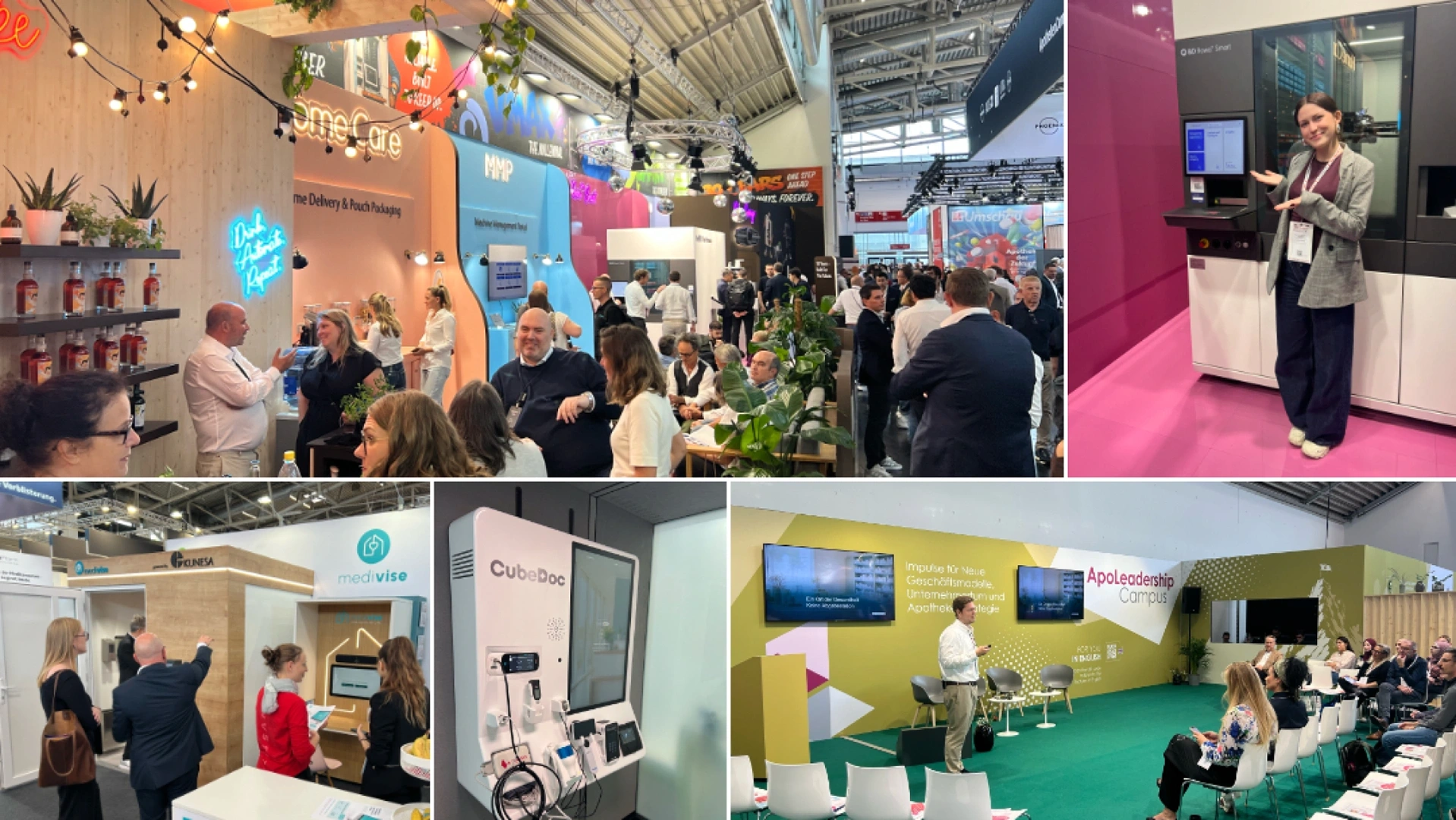
Last week, a colleague and I spent two days at the expopharm 2026 fair in Munich, the leading fair for everything in relation to pharmacies. Our client, BD Rowa, was presenting the current generation of the Smart dispensing robot, including the new SmartUI and a preview of the myRowa customer portal - projects we have been working on together.
After spending months working through these programs with the BD Rowa team, the fair gave us an opportunity to see them in use and to observe how they compare with other solutions on the market. Most importantly, it allowed us to watch pharmacists interact with them first-hand.
There is a real difference between reviewing a design in a workshop and watching someone encounter it for the first time. A pharmacist walks up to the machine, presses three buttons and immediately understands what it wants from them. There is no one explaining the interaction or guiding them through it. How they move through it tells you whether the design is doing its job.
Those moments are revealing. They show whether the decisions made during the design process translate into something that feels clear and intuitive to the people who ultimately have to use it.
What the fair actually showed
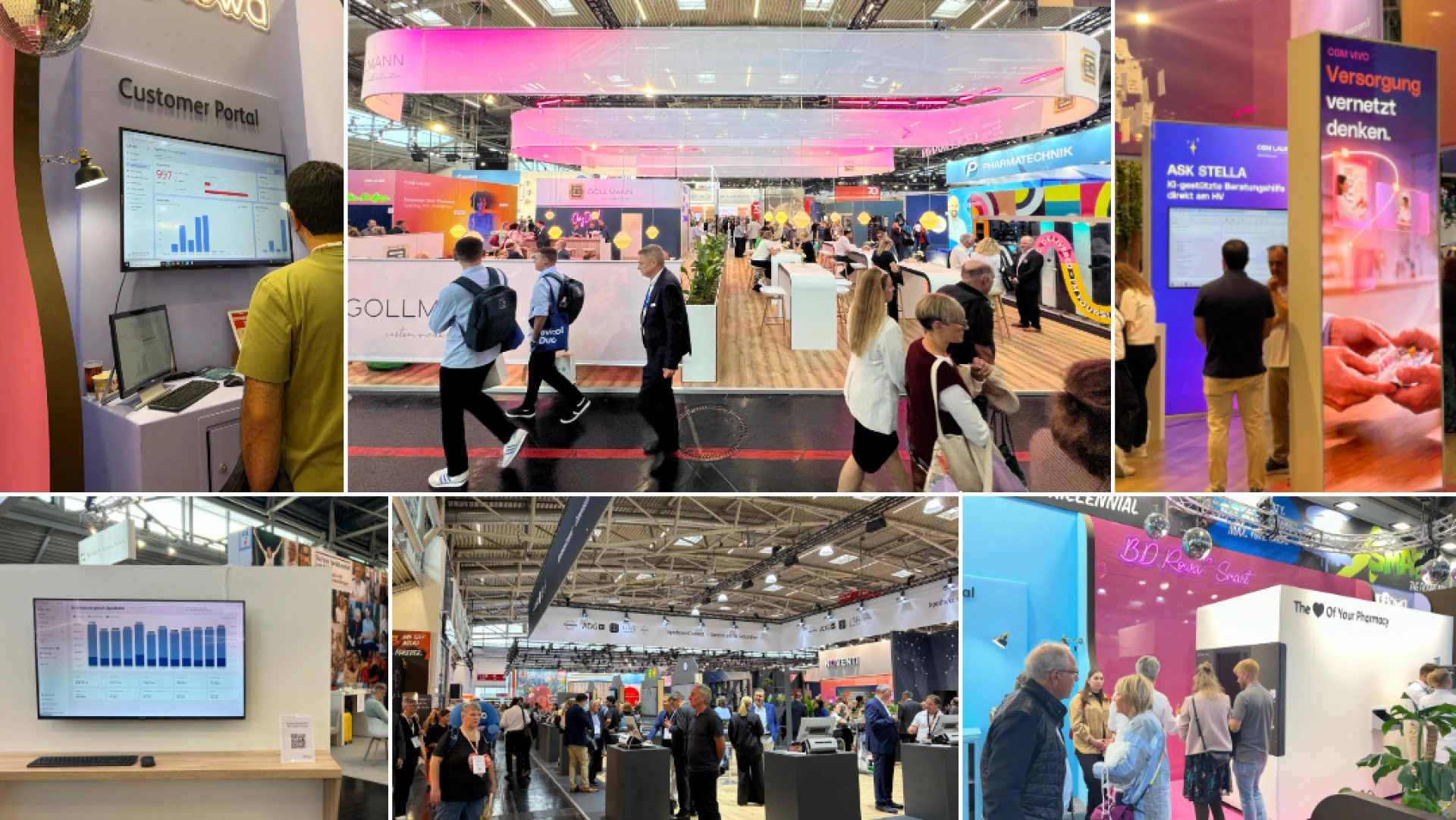
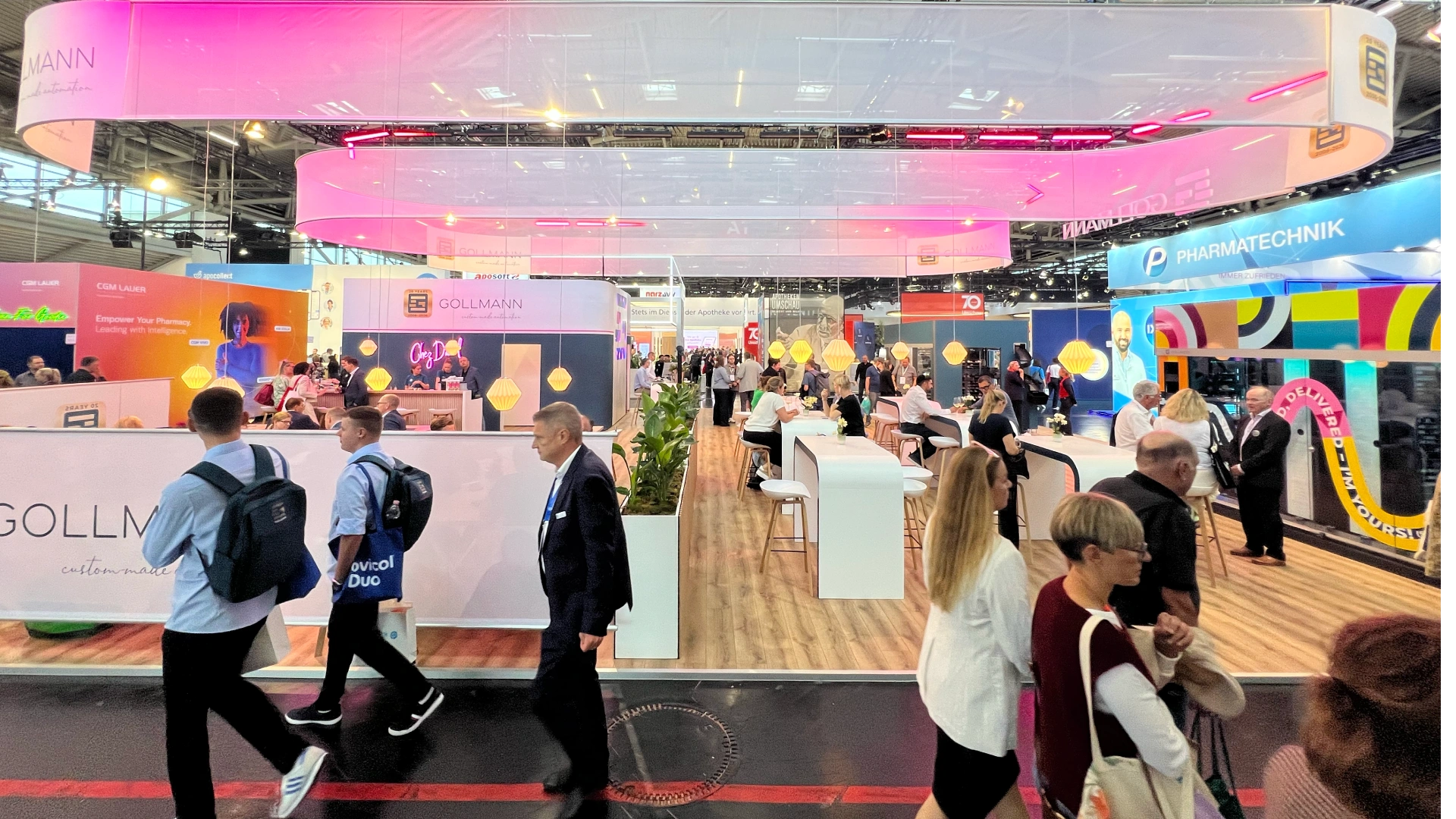
Expopharm is a useful cross-section of the market. In one hall you get the full stack: automation hardware, warehouse and dispensing software, point-of-sale systems, e-prescription connectors, telemedicine booths, the beginnings of AI copilots, and every new service the recent legislation has opened up for pharmacies. Walking it end to end, a pattern becomes obvious. The pharmacy is quietly moving from being a logistics endpoint to being the front row of the German healthcare system.
We wrote about this shift earlier this year in our Future of Pharmacy point of view, and being at expopharm confirmed the direction. General practitioner shortages, an ageing population, and the expanded remit that pharmacies now carry, vaccinations included, are changing what the space in front of the counter is for. A lot of what was on show, from tele-consultation booths to screening services, is a physical answer to that shift.
Data, dashboards, and the value of focus
The biggest single theme on the floor was data. Pharmacies now sit on far more information than they can reasonably use, about their patients, their stock, their margins, their staff. The interesting question is not whether to surface it, but how, and for whom.
Two directions were visible. One is the classic route: rich dashboards, many tabs, many filters, everything on screen because it can be. The other, and the one we found more convincing, is the opposite move. Take the specific decision the person in front of you needs to make right now, and design one small, calm surface that answers it. Nothing else. The AI-assisted tools that stood out were the ones that had the confidence to hide almost everything.
That is where design earns its place. A pharmacy team is under real pressure to compete on efficiency and price with online players, and at the same time is being asked to be more present at the counter, to advise, to vaccinate, to hold a medication conversation. Those two demands only reconcile if the software gets out of the way. Fewer buttons, fewer menus, fewer tabs. More of the right information at the right moment, in a form a busy pharmacist can act on without translation.
BD Rowa and the Smart in context
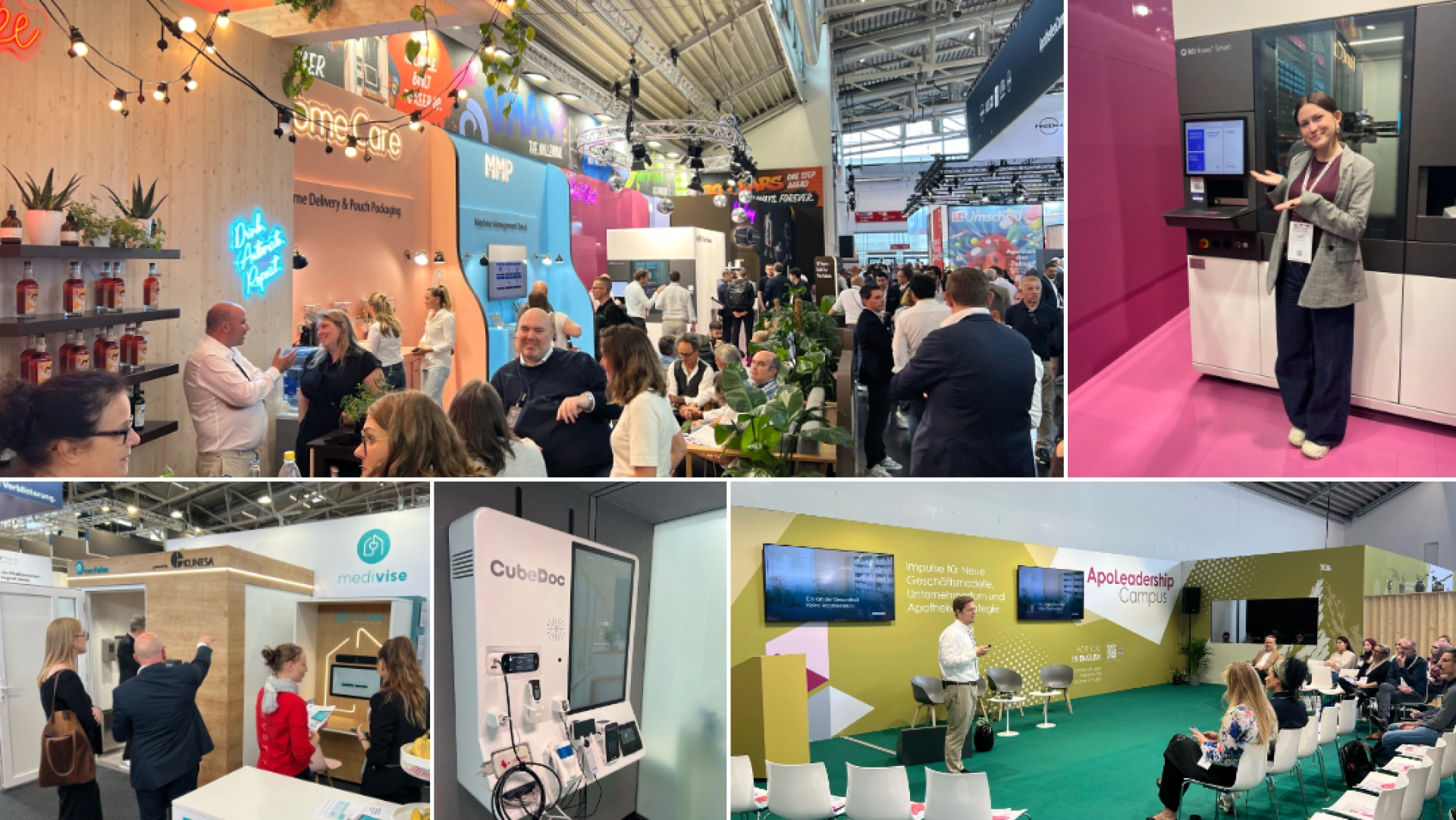
Seeing the SmartUI on the booth, next to the competition, made the design intent tangible. The interface work we did with BD Rowa was never about adding visual polish to an industrial machine. It was about making a safety-critical, high-throughput system legible to non-technical staff on their first shift, and quick for the operators who have been running it for years.
Being shortlisted for the UX Design Award this autumn (2026-08-06_Website-News-BDRowa-UXDesignAward-Nomination), out of more than 500 submissions from 46 countries, was a welcome external signal, but the more meaningful validation was watching pharmacists at the booth try the interface cold and get through it without help.
Alongside the hardware, BD Rowa previewed myRowa, the new customer portal that will launch soon and give pharmacies a single place to manage their Smart systems: service details, maintenance information, documentation, and day-to-day operational data, accessed through BD's single sign-on. We supported the internal team on this work. The portal is the layer where the data conversation gets real, and the same restraint applies as on the machine itself: the value is not in showing everything, it is in showing the right thing to the right role at the right moment.
Where design comes in
Three things sit together and reinforce each other: digitization of the pharmacy itself, sensible use of AI as an in-shift assistant rather than a novelty, and the wider connectivity that the Telematikinfrastruktur (TI) is finally starting to deliver across German healthcare. On their own, each is a technology story. Together, they are a service design problem. The pharmacy team, the patient, the GP, the hospital, the courier, the pickup locker, the tele-consultation all need to feel like one coherent experience, and someone has to shape that.
That is the work we are especially excited about. Not more screens. Fewer, better ones, in the right hands, at the right moment.
If you are building in this space, whether that is pharmacy automation, pharmacy software, or the services around them, and you want a design partner who takes the operational reality seriously, we would like to hear from you. Get in touch at info@wearefluid.com.
Subscribe to our newsletter!

Copyright © FLUID Design GmbH — All rights reserved.